Between the Actor and the Camera
EMIFF 2026 panel “Trusting the Camera: The Actor-Cinematographer Relationship on Set”Matthew Libatique and Maria Drăguș.
Friday 30/10/2026 ⎢10:00 H ⎢RIVOLI ⎢Palma de Mallorca.
I am seated in the Rívoli Theatre, the chairs are very comfortable and the place is spacious. It is not packed and the atmosphere is pleasant. I am very curious about what will come out of this panel and where the conversation will lead us.
Matthew arrives for the discussion and I’m struck by his unassuming presence. But there’s something unmistakable about him. His pink socks and hair sticking up give him a slightly rebellious edge. Stylish, confident, yet entirely approachable.
Sitting beside him is actress Maria Drăguș, whose performance in The White Ribbon has left a lasting impression on me. She appears equally unassuming, sensitive and thoughtful. Neither of them carries the slightest air of celebrity.
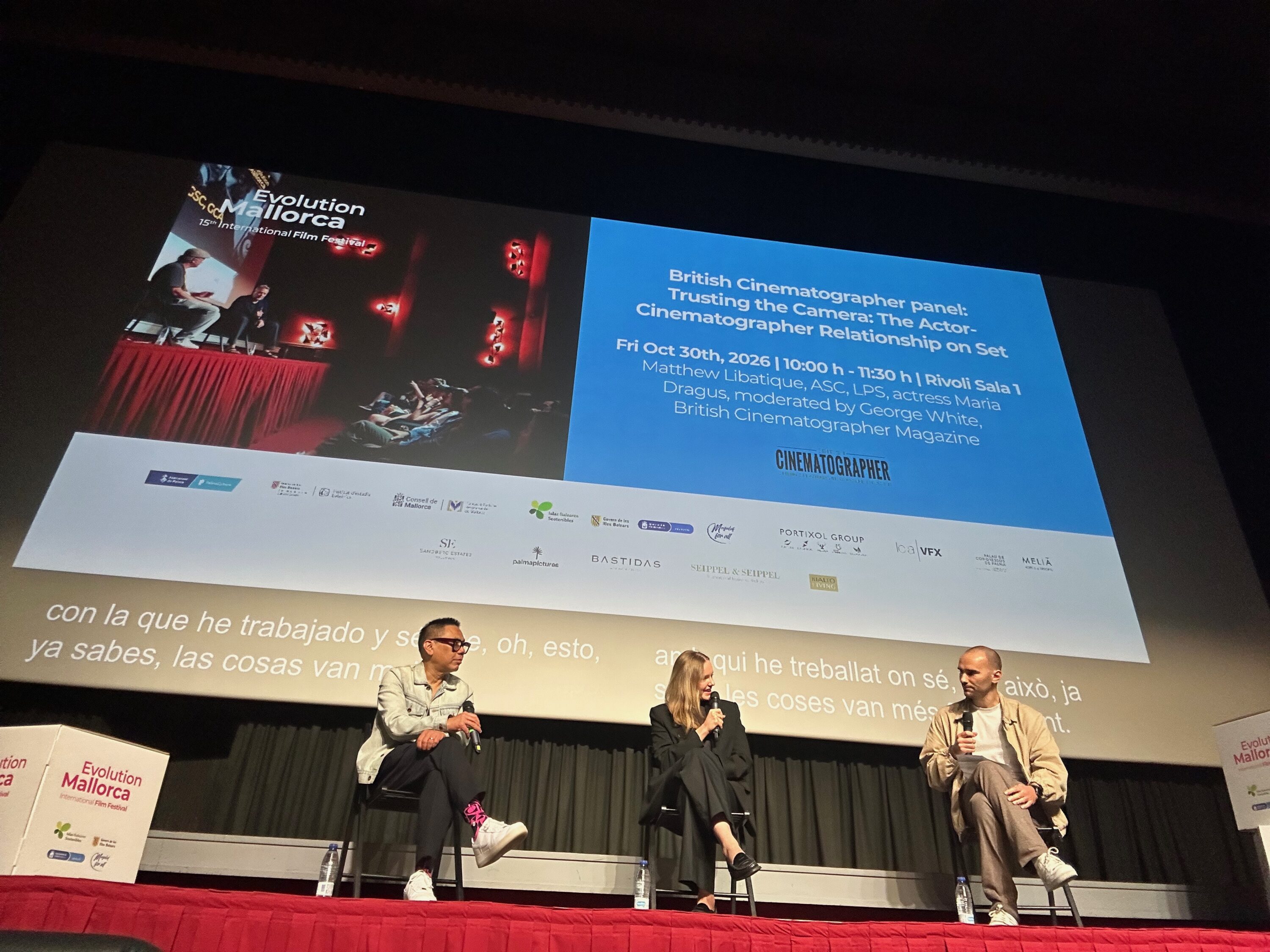
As their conversation begins, I notice they speak with the ease and familiarity of people who have known each other for years. There is genuine warmth between them, but above all, an unmistakable respect. They listen carefully, acknowledge each other’s observations and seem genuinely interested in what the other has to say. At moments, it seems that they are learning something from one another.
I find this particularly appealing. Two accomplished artists, each with a remarkable body of work, engaging in a conversation without any apparent need to establish their authority.
Matthew speaks about the privilege of observing actors through the camera, of witnessing a performance unfold and learning to understand the subtleties of an actor’s process. Maria describes the experience from the other side of the lens, the vulnerability of being watched, the trust involved, and the relationship that gradually develops with the person behind the camera.
As I listen, I begin thinking about this curious encounter between two human beings, one performing, the other observing.
But is observing really what the cinematographer does?
There is something misleading about the notion of a camera as a witness. In fiction, the reality before the lens is already a construction. The director conceives the dramatic situation, determines what belongs within the frame and guides the relationships between its elements. The actors inhabit circumstances that exist for the purposes of the film. We construct spaces, manipulate time, arrange gestures and appearances, and give meaning to events through their eventual juxtaposition. Nothing about this process is innocent or entirely spontaneous.
And yet, something happens when the camera begins to roll that no amount of preparation can completely determine.
The actor brings a living presence into this artificial world. A gesture may last longer than expected. An expression may suddenly reveal something that was not apparent during rehearsal. An unexpected hesitation can alter the emotional rhythm of a scene. These are not necessarily failures of the original conception. They may become some of its most expressive moments.
The director recognizes what belongs to the film and what does not. But the camera is often the first to encounter these moments, through an immediate, physical relationship with the performance.
Matthew’s pleasure in watching actors work takes on another significance. Behind that apparently simple enjoyment lies a form of attention extending beyond the execution of a predetermined composition.
I remember something my fellow cinematographer and mentor Michael Vetter told me years ago. When operating the camera, he suggested, I should keep my other eye open. With my right eye against the viewfinder, the natural tendency is to close the left, shutting out everything beyond the frame. His advice is simple: leave it open. Remain aware of what is happening around the camera, of the movements and gestures that have not yet entered the image.
Over the years, I came to understand his advice as something more than a practical observation. It is a metaphor for a particular state of awareness. A third eye, not necessarily one that sees more clearly, but one that remains receptive to what is not yet apparent.
What happens outside the frame is not necessarily outside the experience of filming. An actor’s presence, the tension between two people, the atmosphere of a room, the subtle change in its emotional rhythm: all these things can influence what happens within the image. There is an energy to a scene that cannot be entirely contained by its composition. Something elusive, sometimes mysterious, that we recognize before we can explain it.
Looking through a camera is never a neutral activity. We do not perceive everything equally, nor do we respond to what we see in identical ways. Our attention is shaped by experience, memory, sensitivity and expectation. Even within a carefully conceived mise-en-scène, the cinematographer brings an individual perception to the unfolding performance.
The act of perceiving is already an act of interpretation. And the decision to respond, however small or instinctive, is an act of expression.
Maria’s reflections bring another dimension to this encounter. To act is to willingly expose oneself to the gaze of others, allowing emotions, gestures and expressions to be observed, interpreted and eventually transformed into something that belongs to the film. The circumstances may be fictional, but the experience of inhabiting them is profoundly human.
She speaks candidly about the vulnerability she feels every time she performs before a camera. What strikes me is that she doesn’t describe this vulnerability as something she eventually overcomes. Instead, she has learned to accept it, to make it part of her work. She calls it “being comfortable with being uncomfortable.”
I find the expression falsely simple. There is a contradiction in it that seems particularly relevant to artistic creation. Experience gives us confidence in what we know, yet the creative process continually confronts us with what we don’t. We prepare in order to know what we are doing, but also to acquire the freedom to venture into what we do not yet know.
Maria also speaks about learning to communicate her needs and establish boundaries. Trust is not a demand that an actor surrender control. It is what makes it possible to explore something uncertain together.
There is a curious symmetry between the actor and the camera. The actor inhabits a character whose emotional life may reveal unexpected possibilities. The camera, guided by the dramatic intentions, must remain receptive to these possibilities as they emerge. Their relationship depends on preparation, sensitivity and an understanding that neither can entirely anticipate the other.
Maria recalls working on Graduation, directed by Cristian Mungiu. She describes the demanding choreography of extended takes, the repeated rehearsals and the relationship that gradually develops with the camera. What begins as a carefully organized sequence of movements becomes something more intuitive, almost a form of nonverbal communication. The actor becomes aware of the camera’s movements, while the camera learns to anticipate the actor’s gestures and rhythms.
The camera is no longer simply following a performance, nor is the actor merely accommodating a predetermined movement. They begin to influence one another, each responding to the other’s presence within a choreography conceived to serve the director’s dramatic intentions.
Matthew’s recollections of filming Black Swan offer another expression of this relationship, quite literally a dance between camera and actor. He describes how he and director Darren Aronofsky attended Natalie Portman’s ballet rehearsals, gradually incorporating the camera into the choreography. They chose to film with wide-angle lenses, remaining remarkably close to her, often framing only her upper body. The camera moved with her, around her, almost as though it were another dancer.
Neither the actor nor the camera could afford to forget the other’s presence. Portman knew where the camera was, when to offer it her face, her profile or simply turn her back. The camera, in turn, remained sensitive to her movements and rhythm. They anticipated each other until what began as a carefully rehearsed arrangement took on the fluidity of a shared experience.
At another point in the conversation, Matthew describes this evolving understanding in a beautiful way: “It’s like the camera is talking to the movement.”
We tend to associate spontaneity with freedom from structure, yet here the opposite appears to be true. Portman’s confidence in the camera’s proximity was rooted in her understanding of Aronofsky’s intentions and the trust established during preparation. Their mutual awareness became part of the performance itself.
In both instances, what resonates with me is not so much how these scenes were accomplished, but the kind of attention these relationships demand. Matthew speaks of understanding an actor’s process, recognizing when something extraordinary begins to happen and remaining attentive enough not to miss it.
I think about how easily technical concerns can occupy our attention while filming. We can become so absorbed in executing what has been conceived that we lose our receptiveness to what is actually taking place. Experience, when it becomes genuine mastery, together with thorough preparation, should free us from this preoccupation rather than reinforce it. The better we understand what we intend to create, the freer we become to recognize and embrace what we never anticipated.
Intuition is not necessarily the opposite of knowledge. It may be one of its most mature expressions. When the craft becomes instinctive, perception and response can be almost simultaneous.
But recognizing an unexpected moment during filming doesn’t necessarily mean it belongs in the finished film. The director must still decide what to preserve, what to leave out, and how these moments contribute to the film’s intended expression.
During a separate conversation at EMIFF, devoted to his career and filmmaking experiences, Matthew speaks about his preference for working with directors who have a clear artistic vision, even when every detail of its execution has not been determined. I understand his position. A strong vision does not require every gesture or composition to be conceived beforehand; rather, it provides the framework to recognize what truly belongs to the film, including something no one could have anticipated.
But the responsibility of the filmmaker is not always to reveal more.
There is a scene in Michael Haneke’s The White Ribbon that has remained with me. Maria’s character, Klara, is being humiliated by her father, the village pastor, in front of her classmates. During his reprimand, she faints. Haneke keeps the collapse strictly outside the frame. We understand exactly what has happened without ever seeing the event itself.
The absence is unsettling. What we do not see becomes inseparable from what we have witnessed. The image acquires its power through what it deliberately withholds. André Bazin’s reflections on cinematic ambiguity come to mind here. His concern with preserving space for the spectator’s interpretation offers a compelling way to navigate this experience, even if Haneke arrives at it through a radically different cinematic language. The filmmaker makes a deliberate choice, yet cannot entirely dictate what the spectator will imagine.
There is also a connection here with the vulnerability Maria describes. An actor offers something deeply personal to the camera, ultimately relinquishing control over how that performance will be framed, cut, or experienced. The director and cinematographer carry a responsibility toward that vulnerability. We are not simply collecting expressions; we are participating in the alchemy of transforming another person’s raw humanity into a cinematic experience.
The finished film carries traces of these encounters. The director gives them coherence, shaping the architecture between the actors’ performances, the images and everything that surrounds them. Yet the work itself frequently reveals possibilities that were invisible when it was first conceived.
There is a vast difference between knowing what one wants to express, and knowing exactly how that expression will finally take shape.
At the Rívoli, Matthew speaks with unmistakable pleasure about watching actors perform. Maria describes the vulnerability of allowing herself to be watched. Their vantage points are different, but both recognize that the heart of the craft lies in remaining entirely attentive to another human being.
I recognize something of my own experience in both of them.
Michael Vetter’s advice about keeping the other eye open acquires a deeper meaning here. It isn’t simply about seeing what lies outside the frame. It is about remaining available to what the film is trying to become.
Is an artist’s vision defined by what they intend to create, or also by their ability to recognize something they could never have imagined?
Senaste 5 nyheterna
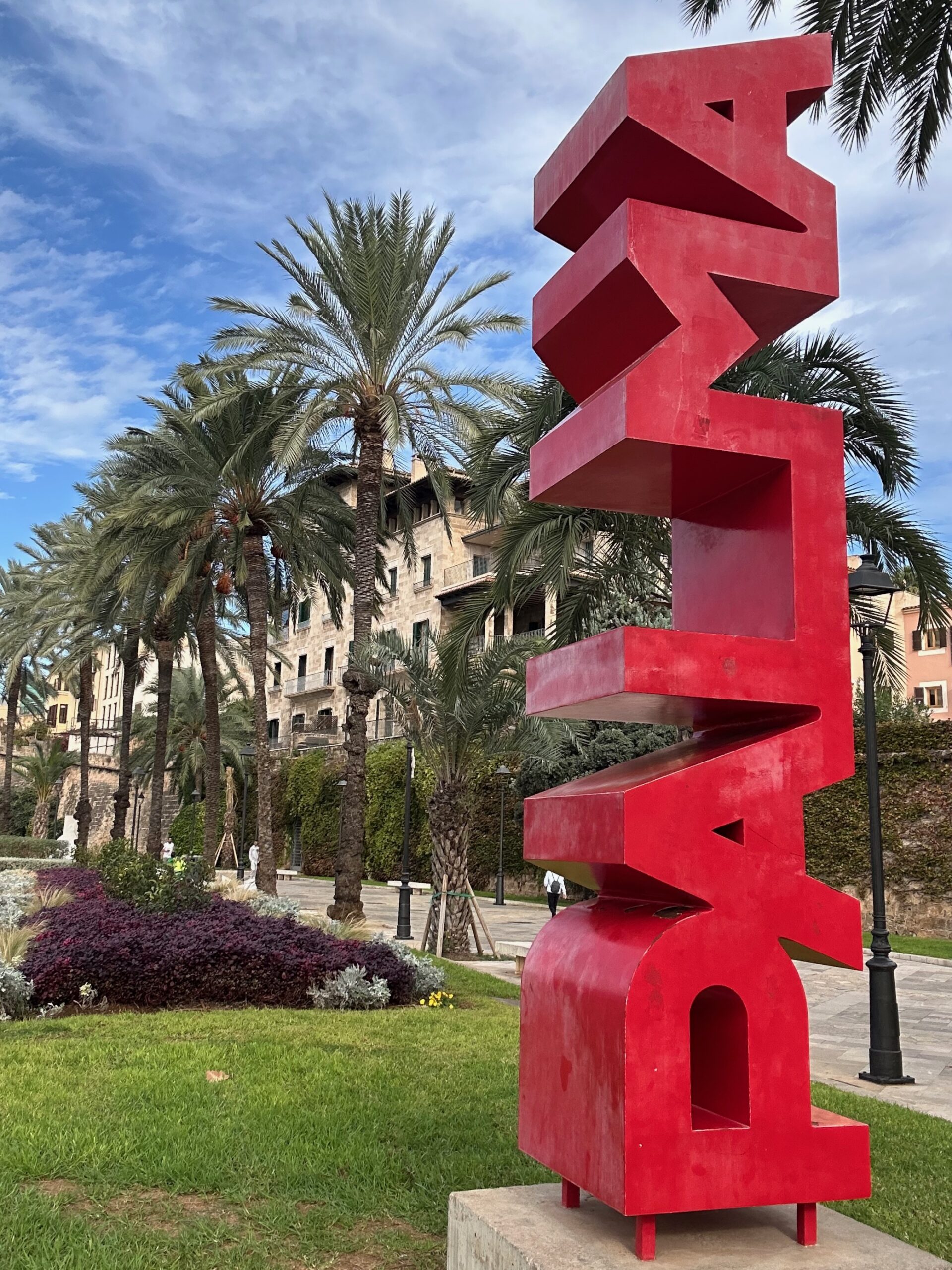
Pickled Herring
Some personal impressions from EMIFF 2026, by Lars Herrmann.
Here I am, packed into the airplane cabin, with 180 pale Swedes on a high-stakes höstlov migration, desperately fleeing the incoming dark for a few final hours of the Mallorcan sun.
Palma welcomes me with sunshine, warmth and the restless rhythm of traffic. Coming from Stockholm, the contrast is striking. The streets are lively, the terraces crowded, and there is a certain pleasure in walking through a city that seems reluctant to let go of summer. Stockholm, meanwhile, has already begun rehearsing winter.
Läs mer…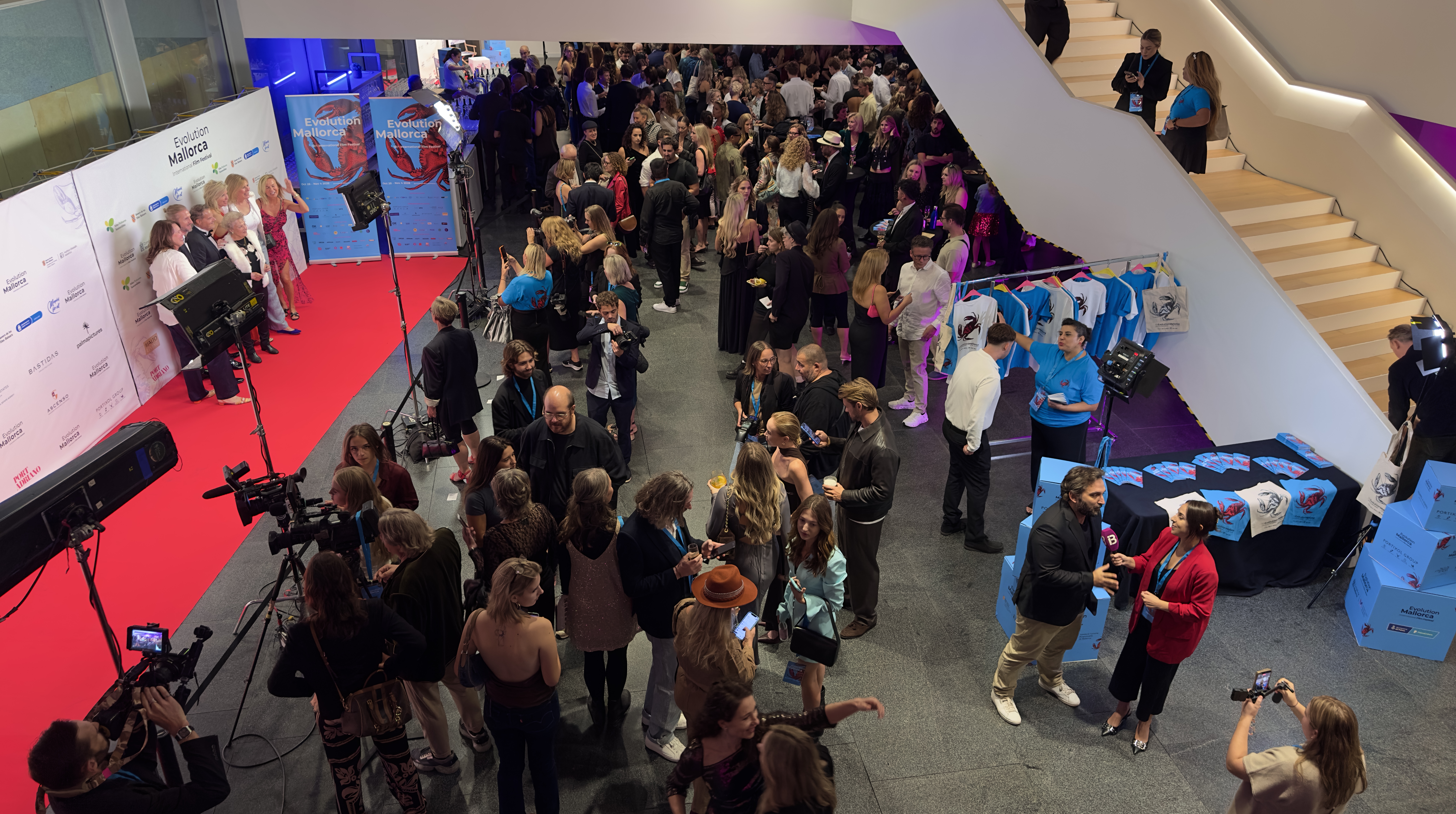
EMIFF 2026 – inspirerande dagar med fokus på filmfoto
Årets Evolution Mallorca International Film Festival blev en oerhört inspirerande upplevelse. Framförallt Cinematography Focus, med dagar fyllda av paneler, workshops, filmvisningar och många givande samtal med filmfotografer och andra kreatörer.
Cinematography Focus arrangerades för femte året i rad 28–30 oktober. Från FSF var även Lars Herrmann och Eric Börjesson på plats. Det fanns mycket att ta del av, men framförallt var det roligt att träffa kollegor, både lokala och besökande från andra delar av världen.
Skönt också att komma ifrån det svenska höstmörkret och regnet. Vädret på Mallorca var strålande, åtminstone de få minuter man var ute mellan biosalongerna!
Läs mer…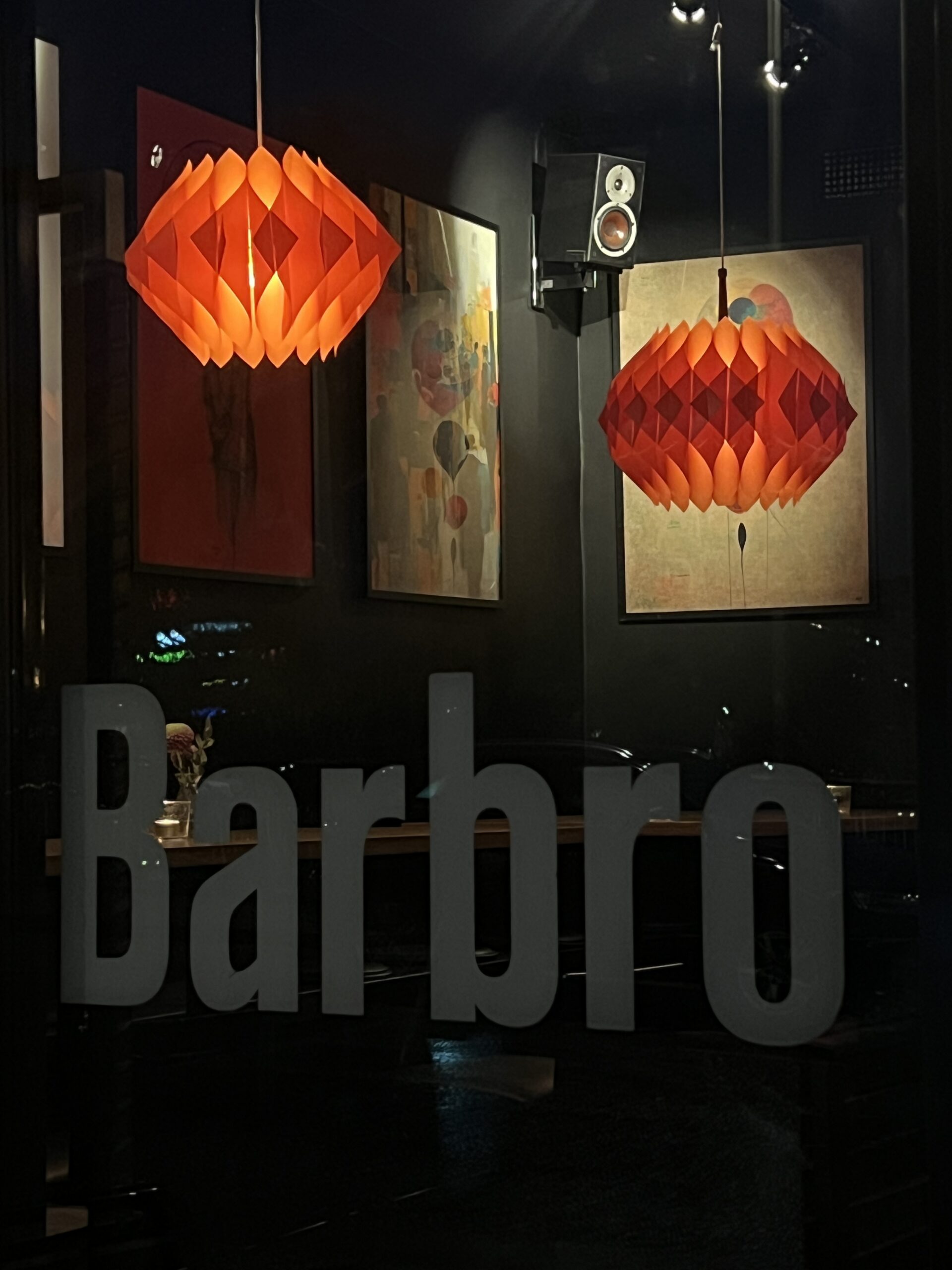
Glöggmingel med FSF tisdagen 1:a december kl. 18
Dags att hålla liv i en gammal finfin jultradition inom FSF, förfira innan julen är på ingång med dina filmarvänner och kollegorna inom FSF. Vi ses för att dricka glögg, och prata innan julen sveper med oss alla i ett totalt julkaos!
Varmt välkomna till årets GLÖGGMINGEL 2026, vi ses på Barbros tisdagen 1:a december kl. 18.00.
Vi öppnar dörrarna från kl. 18 för mingel, glögg, pepparkakor och skumtomtar.
Vi uppskattar fortfarande klubben som en trevlig mötesplats för oss medlemmar och ni får gärna äta middag först, vilket gagnar både klubben och FSF:s ekonomi.
FSF bjuder på glögg, skumtomtar och pepparkakor. Kom och mingla, ät och drick gott och förfira in julen med dina kollegor!
Varmt välkomna hälsar hela FSF:s styrelse.
Ansvarig för kvällen och vid frågor kontakta:
Ewa Cederstam
För vägbeskrivning:
www.bar-bro.se
Nordic Cine Forum 2026
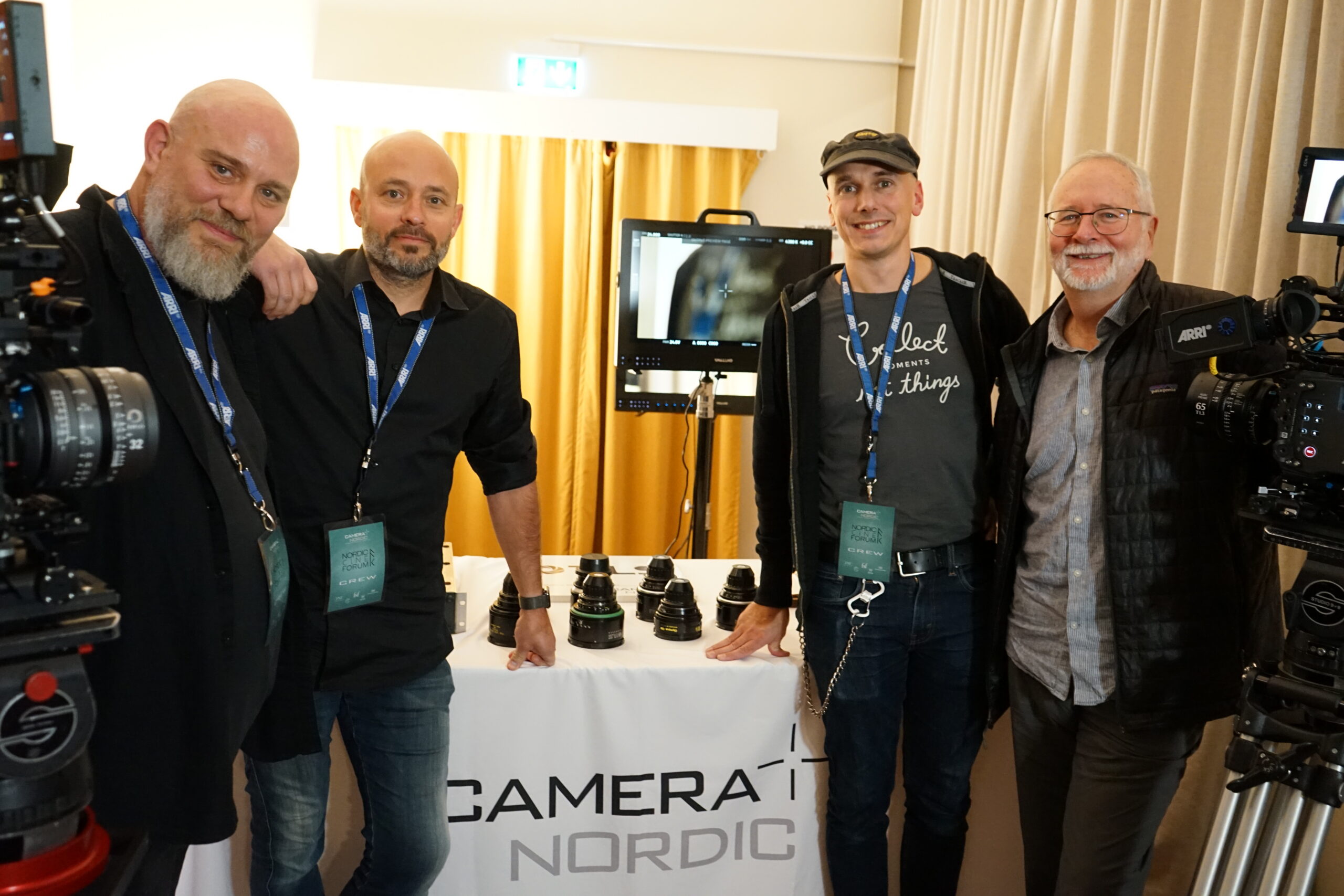
World famous cinematographer Sean Bobbitt BSC (”12 Years a Slave”, ”Judas and the Black Messiah”) was guest of honour when the first ever edition of the Nordic Cine Forum took place November 5th at the facilities of post production specialists The Chimney Pot in Stockholm Sweden. Organized by Camera Nordic AB in collaboration with the Scandinavian cinematographers’ societies FSF, FNF, FSC, DFF and WIFT-tech, and in partnership with Chimney Pot, this gathering brought together the Nordic cinematography community for a day of artistic exchange, technical innovation and collaboration. Of course having the event take place this late in the year was beneficial as well, since normally there aren’t massive amounts of productions up and running at this time. However, late autumn didn’t stop Stockholm from showing off its best side though, as the weather was exceptionally beautiful for the season with bright sunshine and clear blue skies. The international guests could not have hoped for a more beautiful day to visit ’The Venice of the North’, as the city is frequently referred to.
Läs mer…
Invitation – Nordic Cine Forum 2026
Connecting the Nordic Cinematography Community
5 November 10:00-19:00
Chimney Pot
WELCOME!
We’re thrilled to invite you to the first Nordic Cine Forum! A space for the Nordic cinematography community, organised by Camera Nordic and in collaboration with FSF (Swedish Society of Cinematographers), FNF (Norwegian Society of Cinematographers), FSC (Finnish Society of Cinematographers), DFF (Danish Society of Cinematographers) and WIFT-tech (Collective of Women+ working behind the camera), in partnership with Chimney Pot.
Läs mer…