Motion Meets Emotion with ARRI
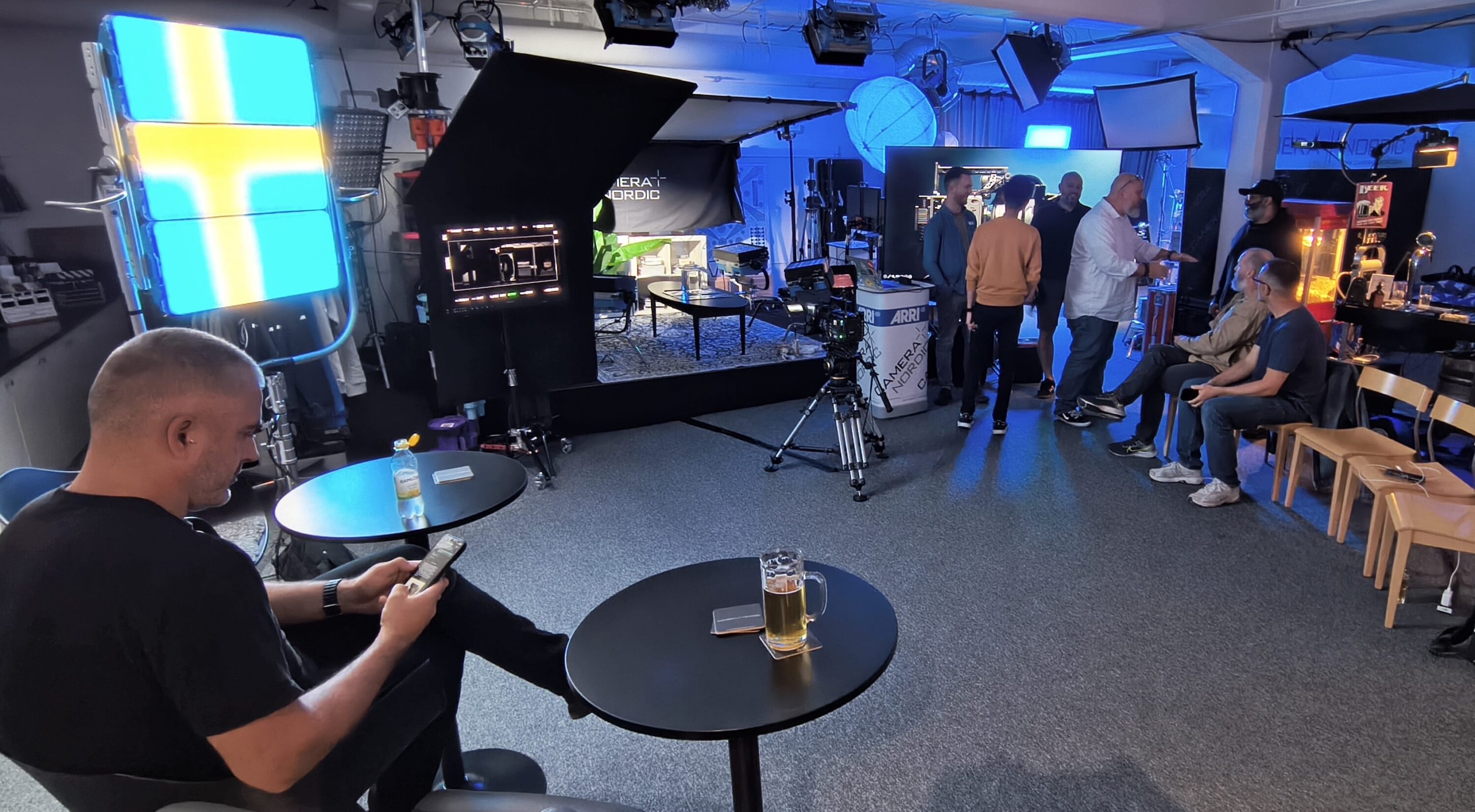
On Tuesday 16th of September, the intriguing headline ”Motion Meets Emotion with ARRI” attracted an expectant crowd to Camera Nordic’s headquarters on Västmannagatan in Stockholm. Visitors were treated to a unique opportunity to learn more about ARRI’s latest camera ALEXA 35 Xtreme, and invited to see for themselves how impressively it performs when supported by Arris lighting products, in particular the SkyPanel X.
The overall plan was that of a brief technical presentation by ARRI Academy experts Igor Barbosa (Color Science & Workflow Specialist) and Craig Gambell (Gaffer & Lighting Trainer) followed by a social evening of tech chat with some light snacks and drink. The workshop offered a valuable chance for cinematographers, gaffers and operators to personally get hands-on experience with the new ALEXA 35 Xtreme and the newly launched ARRICORE codec, while also exploring best practices for high-speed lighting using the SkyPanel X. Camera Nordic and ARRI have offered two timeslots for this workshop, one mid-day option and another in the late afternoon, and I personally find this to be an intelligent move. Some people can manage during office hours, and others are more comfortable with an evening session. In any case, the audience was about the same size for both gatherings.
Igor and Craig kick off their presentation by showing a newly produced featurette shot with the ALEXA 35 Xtreme showcasing some gorgeous slo-mo footage of sailing boat crews battling the waves and the elements.
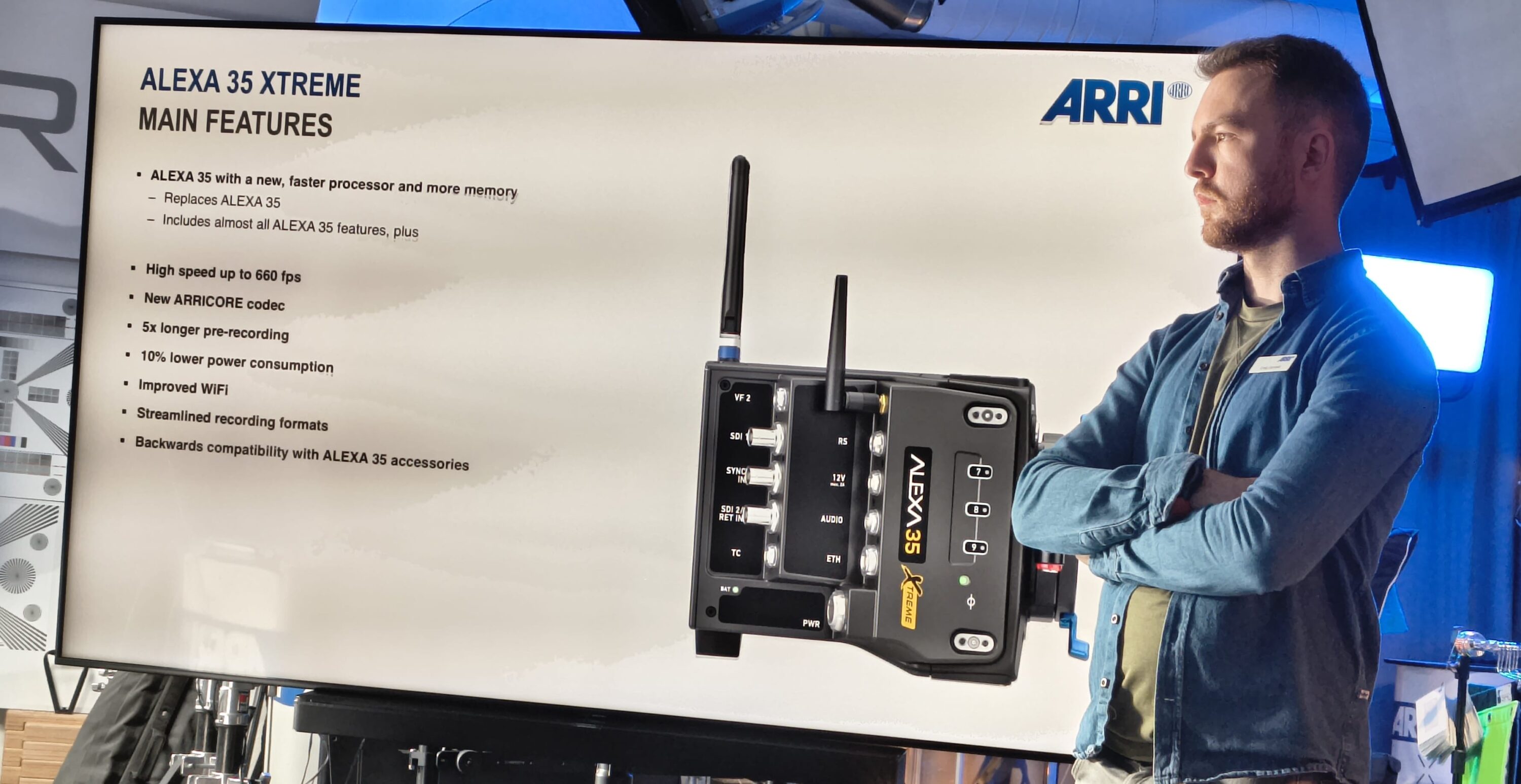
As if the footage we’ve just seen isn’t all the evidence you could wish for regarding the performance of the new 35 Xtreme, Igor gives us the upgrades from a standard ALEXA 35, one by one.
”The ALEXA 35 Xtreme is the latest addition to the ALEXA family”, Igor explains, ”it’s a hardware upgrade to the ALEXA 35 with a new, faster processor and more memory. Every new ALEXA 35 will be the Xtreme version, and earlier ALEXA 35s can be upgraded to Xtreme. The hardware upgrade is all internal and features an entirely new cooling core and faster hardware encompassing a new image process board which allows us to push the sensor to higher framerates. With the Xtreme you can shoot at a maximum of 660 fps.
We’re also introducing our new in-house developed ARRICORE Codec, an RGB codec that offers superb image quality and extensive post-production flexibility at a significantly lower data rate -roughly half the size of Arriraw. This has been made possible by the camera’s greater processing power. We’ve also interviewed users regarding the original ALEXA 35, and found that some recording formats weren’t used that much, so we’ve streamlined the list of recording formats”. Rounding out the list of improvements in the new camera, it also offers 5x longer pre-recording, 10% lower power consumption, improved WiFi and backwards compatibility with ALEXA 35 accessories.
In his part of the presentation, Craig points out the advantages derived from being a manufacturer of a broad range of equipment, including both cameras and lighting gear. The 35 Xtreme and the SkyPanel X are both beneficiaries of the accumulated knowledge built up at ARRI over the years. ”We strive to make everything work well together, cameras with lights, LED with tungsten etc” Craig adds, ”and are acutely aware of both safety issues and technical performance”.
As soon as the presentations are done it is ”open house” with snacks, drinks and tech chat, and the audience is invited to try out the ALEXA 35 Xtreme, which is rigged up and poised to go in front of an all-skyPanel X lighting set up in the centre of the room. A lot of mingling and chatting ensues, and Igor and Craig are in high demand.
I have a very good talk with Camera Nordic’s Steve Calavitis about the current situation in the industry and the impact of AI… And whether AI is a threat or an opportunity, something which we still have to find out. There seems to be a consensus among camera crews that 2025 is a better year than 2024 so far, productions are picking up. On the topic of whether AI is a long-term threat to the industry, there Steve feels that, unlike a business where you’re manufacturing inanimate products such as shoes or T-shirts and you can cut corners to your hearts delight along the way in order to find more efficient ways of manufacturing as long as the customer identifies the end product as an okay shoe or T-shirt, the motion picture business is a different animal altogether. ”It’s a business of entertainment driven by creativity not efficiency”, Steve muses, ”and the audience must find the end result valuable and worthwhile, entertaining and relatable, otherwise the whole premise of moviemaking crumbles. The audience wants stories told by people who care about what they’re doing, and shot using high-quality high-end gear, and they can tell the difference. The end visual result reflects on the time, passion and equipment used to make it, more often than not the audience might not be able to identify it, but their overall viewing experience will. When the dust settles, AI will be a tool in the filmmaker’s toolbox along with lights, tripods, greenscreens etc”.
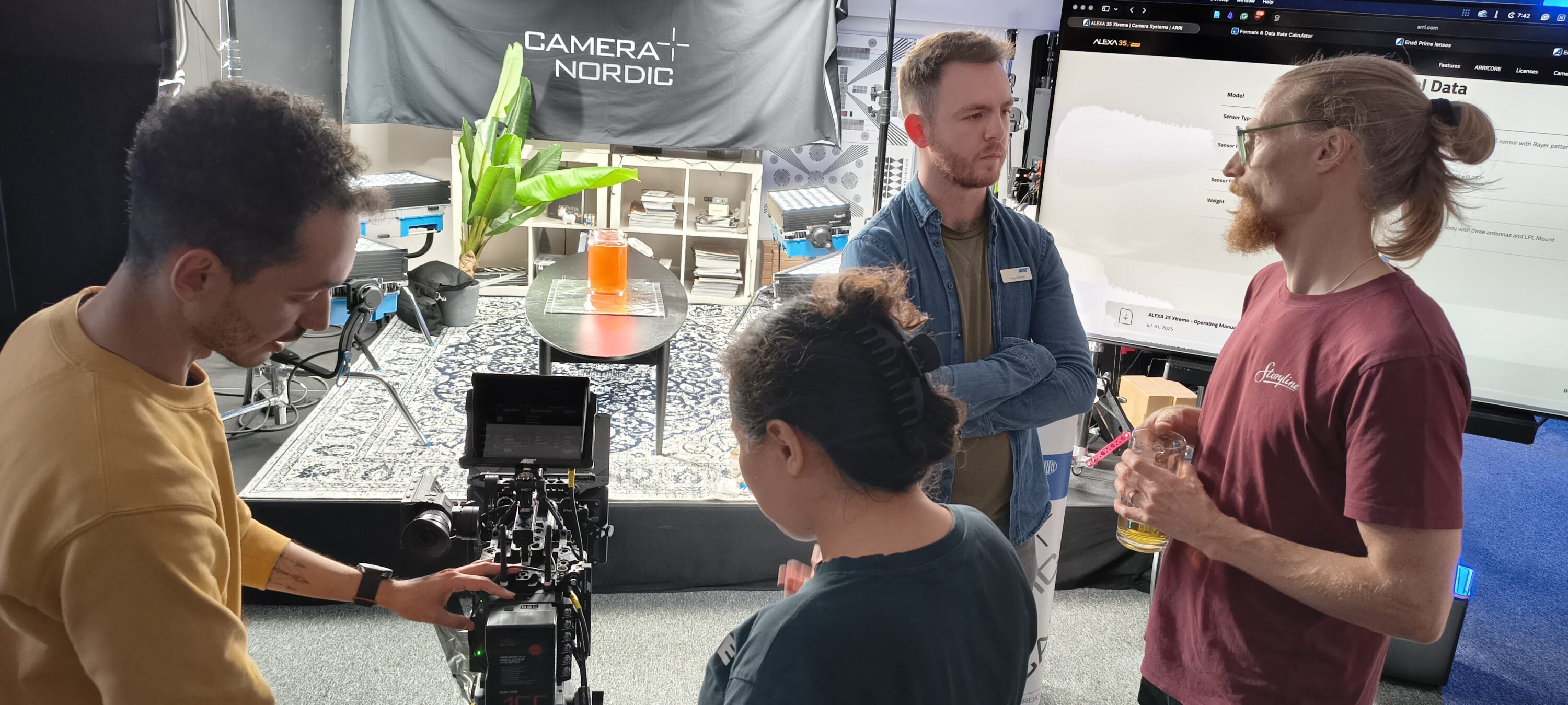
Igor and Craig have now become a little more available and I ask them to elaborate on a few things from their presentation. Instinctively, I would’ve thought that when shooting high-speed cinematography, one would be limited to a rather brief period of time because of the extreme demands on the camera, but it seems the new cooling core is tremendously effective. ”If you want 660 fps you have to go into sensor overdrive mode”, Igor clarifies and continues ”at the absolutely highest fps the dynamic range is limited to 11 stops, and you must also use smaller resolutions as well, but the performance of the camera does not limit your recording capacity, you can fill the entire 2 TB card with 24 minutes of footage”.
I then ask Craig to elaborate a little on how the ALEXA 35 Xtreme and the Skypanel X work particularly well together when shooting high-speed scenes. ”When LED started to turn up on movie sets about a decade ago”, Craig explains, ”people found that high speed cinematography with LEDs was problematic and would introduce flicker in your footage, particularly with your lighting dimmed down, so you had to run the LEDs at 100%. High speed means we need higher refresh rates on a LED fixture in order not to see the flicker. ’High speed mode’ in our lights, like the Skypanel X and Pro, means no flicker across the board and no effect on the colour quality either. ’High speed mode’ means dimming is made with current-control (like with tungsten units) instead of PWM, which is the traditional way of dimming down a LED fixture”.
I’m also curious what Craig was referring to when he mentioned safety issues in his opening speech, did he mean electrical safety? ”Well obviously electrical safety is important”, Craig points out, ”but we also focus a lot of attention on issues like Tungsten heat and HMI UV radiation. The M-series HMIs, which are an important part of ARRI’s product portfolio, have their UV absorbing coating on the safety glass of each unit”.
When I mention that ARRI have discounted all their HMI units except for the M-series, Craig offers ”many companies have stopped making HMIs now. So many fixtures have been produced over the years, and are still out there and ’in action’, that there is a certain saturation regarding HMI units”.
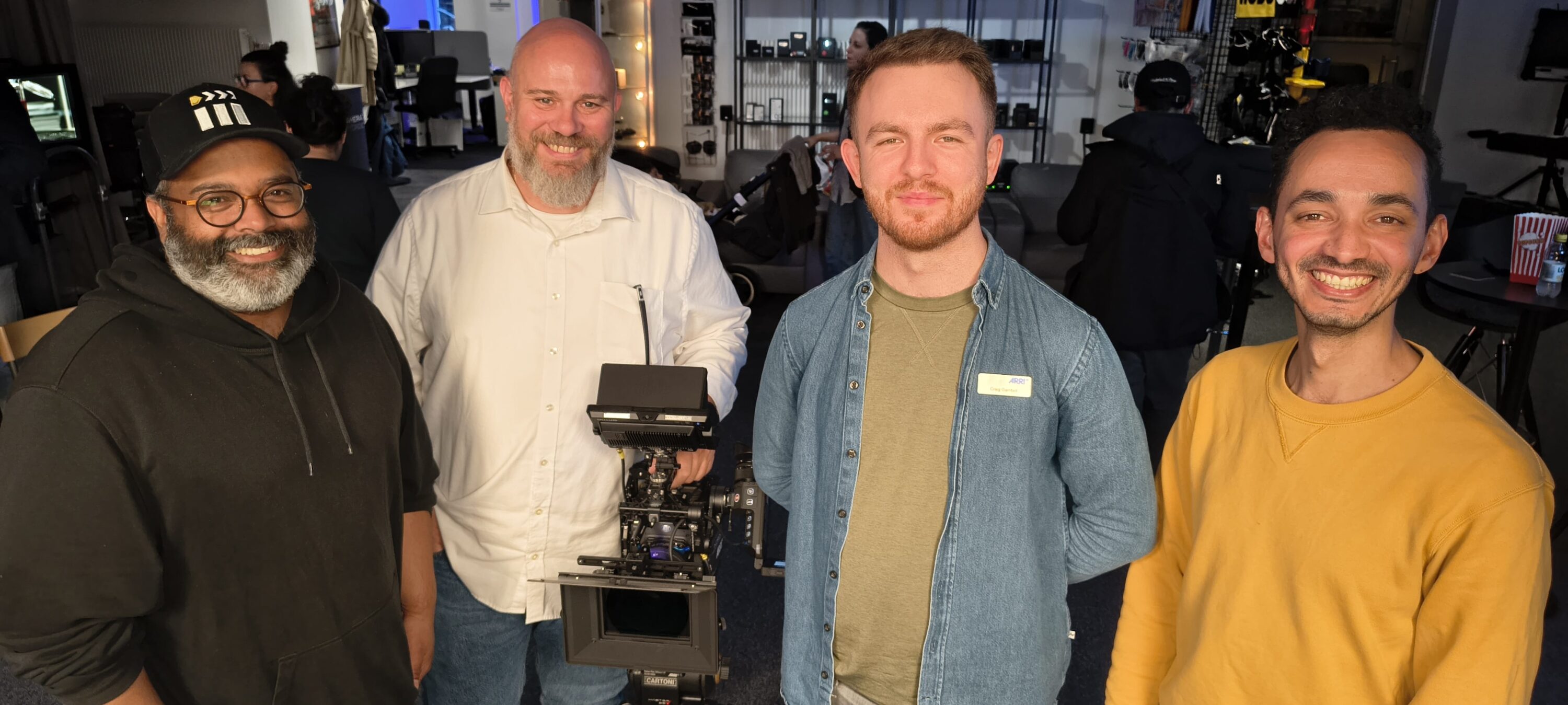
Tomorrow will be a travel day for Igor and Craig, and then the day after that they will give their presentation for our friends in the FNF at Camera Nordic in Oslo as well. All of us in the audience leave Camera Nordic’s facilities here in Stockholm considerably enlightened and very satisfied, convinced that the Norwegians are in for a treat.
Lars Pettersson FSF
Senaste 5 nyheterna

Ellinor Hallin till Barbros torsdag 5/11 kl. 17.30
Varmt välkomna tillbaka torsdag 5/11 kl. 17.30 då gästas vi av Ellinor Hallin som i första hand ser sig som dokumentärfilmsfotograf.
Hon har bland annat filmat dokumentärer som Filmen om Siw, Riddaren på Strandvägen, Josefin & Florin, Kören, Scheme Birds och Little to Big.
Läs mer…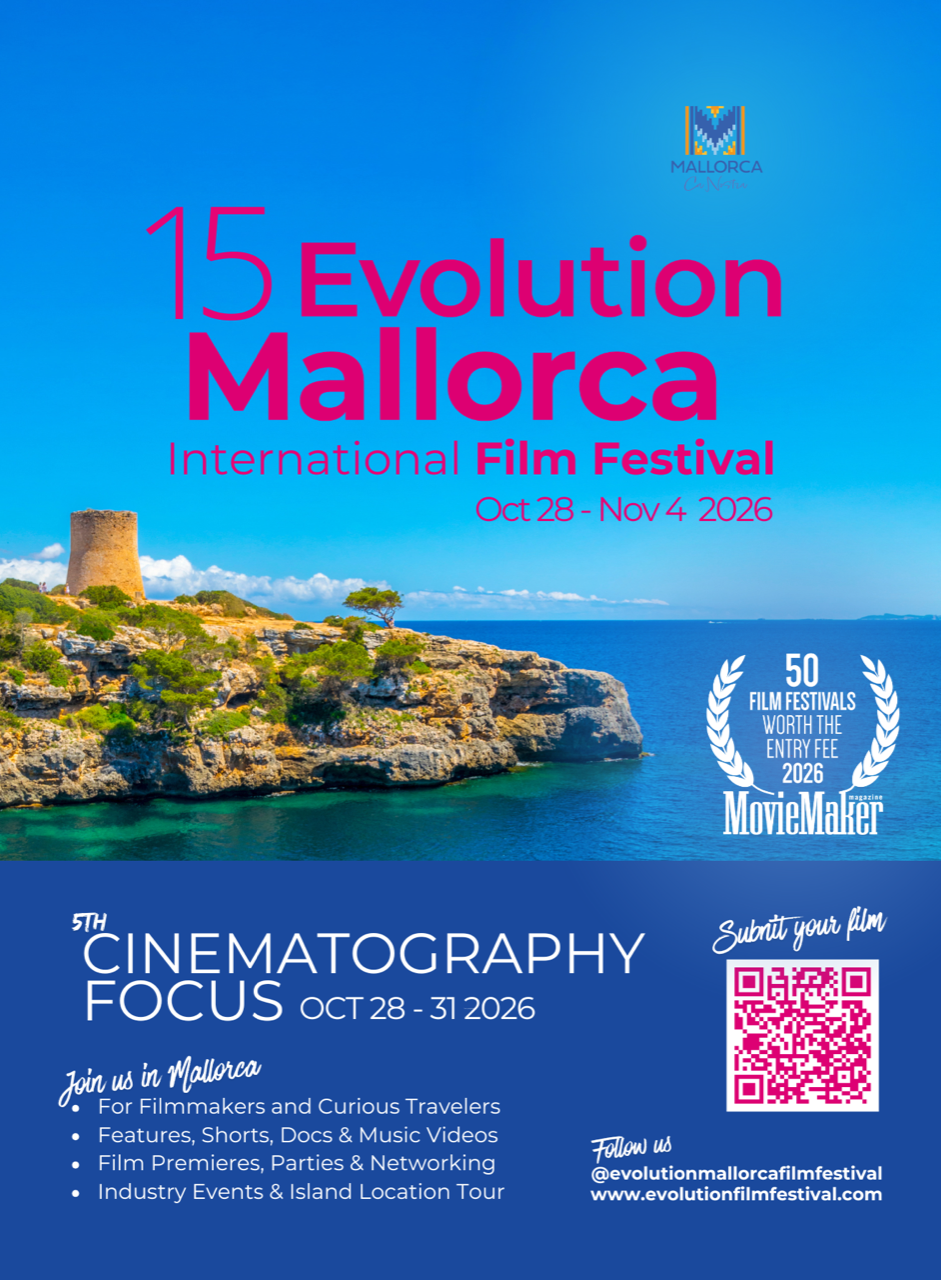
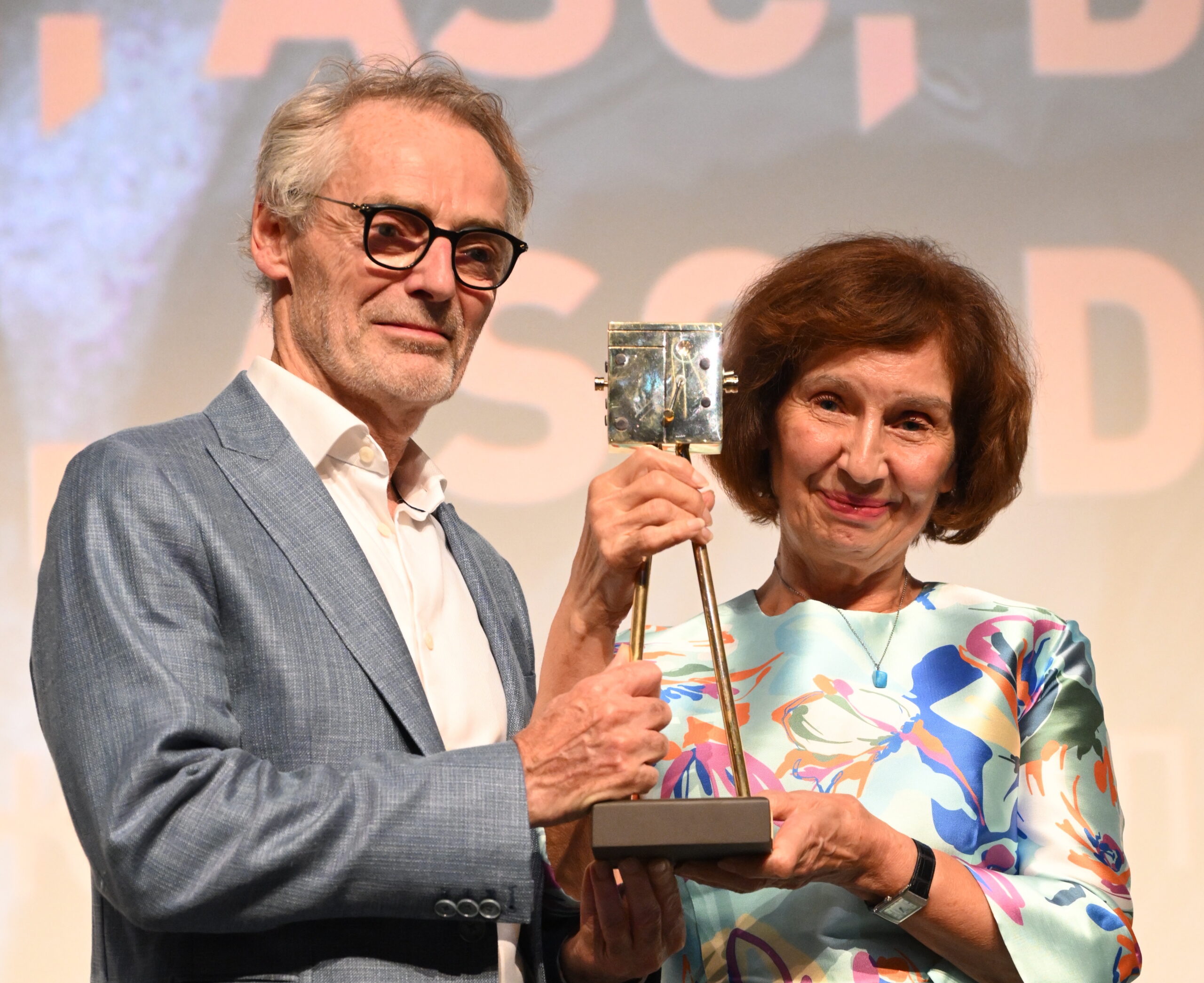
Manaki Brothers Film Festival 2026
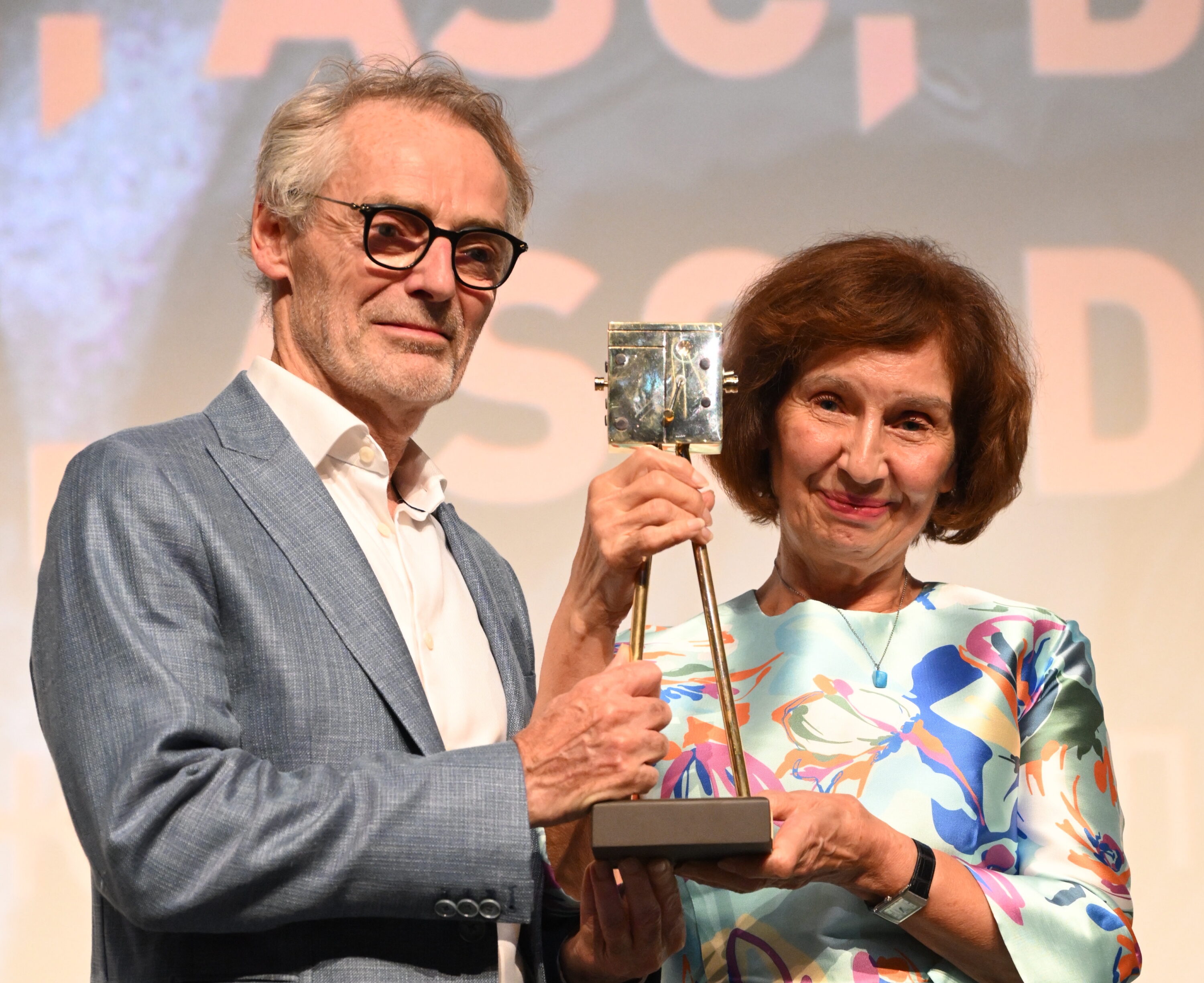
Between the 19th and 25th of September, the impossibly picturesque little town of Bitola, North Macedonia, was once again the backdrop to the International Cinematographer’s Film Festival ”Manaki Brothers”. This, the 47th edition of the festival, offered a full week of presentations, endless film screenings and a whole bouquet of other perks for those fortunate enough to be here. And those of us attending from Northern Europe get to enjoy an additional perk since for a brief few days summer makes a very welcome little encore appearance -and it is largely over and done with back home. And speaking of northern Europeans, this time around the FSF decided to send two representatives, co-President Jon Rudberg FSF, and yours truly.
Läs mer…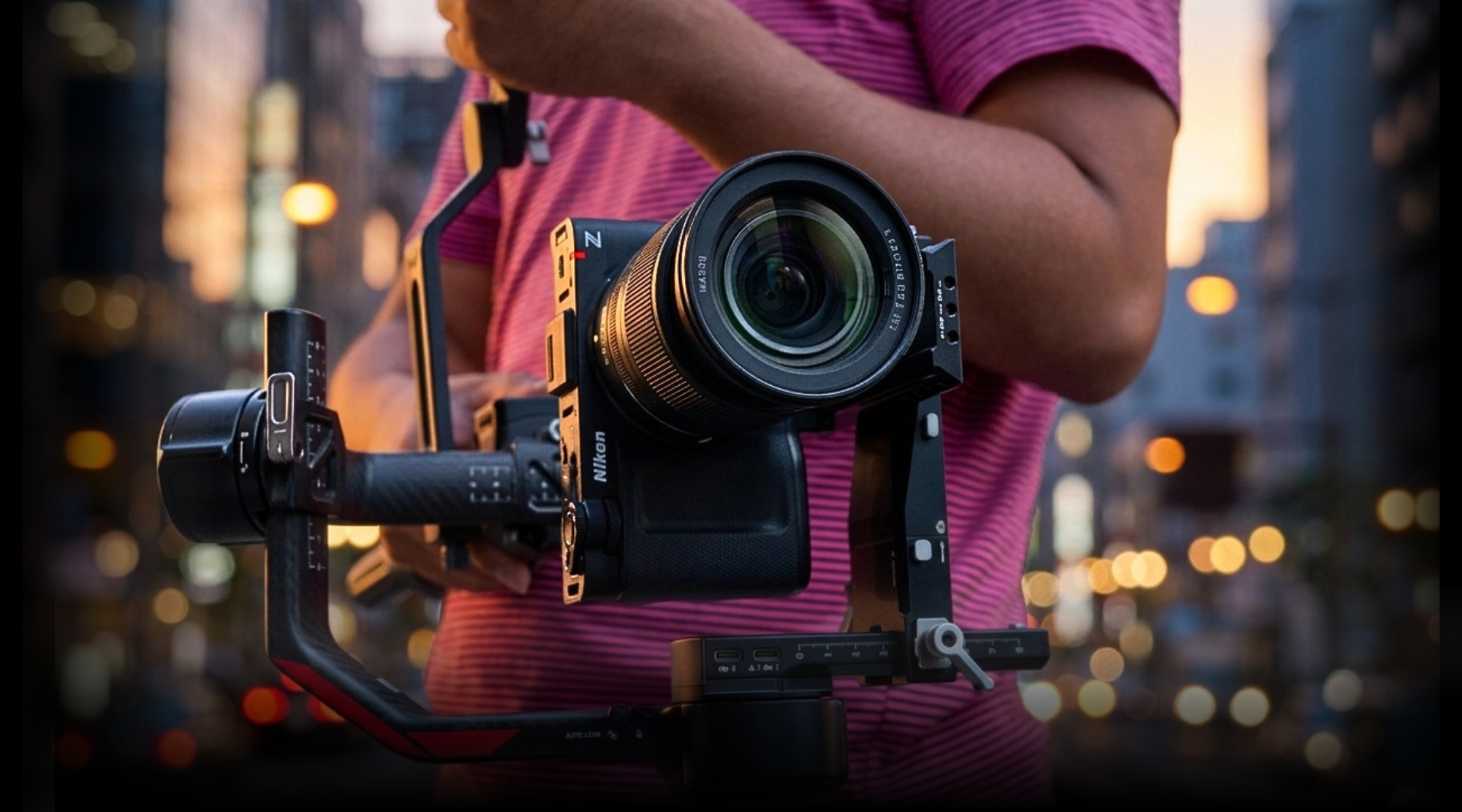
Nytt datum: Introducing Nikon ZR Cinema — now at Camera Nordic, October 22
When: Thursday, October 22, 2026, from 17:00
Where: Camera Nordic, Västmannagatan 17, Stockholm
Register here:
https://nikon-zr-cinema-now-at-camera-nordic.confetti.events
Compact filmmaking with anamorphic magic
Come and get hands-on with the Nikon ZR — a compact full-frame 6K cinema camera that packs serious filmmaking power into a small, lightweight body. With R3D NE RAW, 15+ stops of dynamic range, built-in stabilisation, 32-bit float audio and a versatile Z mount, it’s designed to deliver high-end results without breaking the bank.
Läs mer…
Video: Femte IMAGO Art & Technology med NANLUX – 27:e september kl 17.00
Inspelningen finns här:
https://www.youtube.com/watch?v=GEp1Nh5uLIg
We invite you to join us for the 5th edition of IMAGO Art & Tech: NANLUX, taking place on Sunday, September 27th.
This special session features Steven Fierberg, ASC (Emily in Paris, The Affair, Entourage), Julia Éqüi, ABC, DAFB (Lady Voyeur, Summer Heat) and Malcolm Mills, Nanlux’s General Manager and Director of Business Development and Technology, moderated by Ana Amortegui, ADFC (The Cleaning Lady, Quantum Leap, Resident Alien).
We look forward to seeing you there!
Jörgen Persson 90 år
Jörgen Persson FSF, en av Svenskt Filmfotos ”Grand Old Men”, fyller 90 år torsdagen den 10e September i år. Vid sidan av Sven Nykvist var Jörgen Persson under senare halvan av 1900-talet vår internationellt mest framgångsrike svenska filmfotograf, och bland hans stora internationella filmer märks ”Andarnas hus” 1993 och ”Les Miserables” 1998. Idag har vi, med namn som Linus Sandgren och Hoyte van Hoytema, blivit bortskämda med internationellt framgångsrika svenska fotografer, men under Perssons och Nykvists storhetstid var detta ”a big deal”.
Läs mer…