Who Gets to Look?
The Female Gaze in the Era of AI and Self-Commodification.
We observe a young woman undressing through a doorway. Then the camera shifts, revealing a young man watching her. The woman assisting her immediately reprimands him. Suddenly, our relationship with the image changes. Have we simply been observing an intimate moment, or have we been made complicit in the intrusive gaze directed at her?
This is one of the moments discussed at the Rívoli Theatre in Palma during The Female Gaze in the Era of AI and Self-Commodification, a Cinematography Focus panel bringing together cinematographers Valentina Caniglia CCS, ASC and Bojana Andrić SAS, moderated by Nic Sadler.
The sequence comes from Love Cuts (Reži), a Serbian feature photographed by Andrić. Sadler draws attention to how the composition initially places us in the position of observers, only to confront us with the act of looking itself. What initially appears to be an ordinary cinematic perspective acquires another meaning when the spectator becomes aware of the voyeurism taking place within the scene.
It offers a practical illustration of the question at the center of the discussion: whose perspective determines how we experience an image?
Sadler introduces the subject through Laura Mulvey’s influential 1975 essay, Visual Pleasure and Narrative Cinema. Mulvey questioned the conventions through which classical narrative cinema encouraged identification with predominantly male protagonists while frequently presenting women as objects of visual pleasure.
The gaze, in this understanding, is not simply about who appears before the camera. It concerns who looks, who is looked at, and how cinematic language positions the spectator within that relationship.
Half a century later, the discussion has moved beyond defining the female gaze merely as the opposite of the male gaze.
Andrić emphasizes that the gaze isn’t determined by the gender of the filmmaker. Our experiences and ways of seeing can certainly be shaped by gender, among many other influences. A man can challenge established conventions of objectification, just as a woman can reproduce them. What matters is how the story positions us in relation to the characters and their experiences.
Andrić’s examples from Love Cuts, directed by Kosta Đorđević, demonstrate how these ideas translate into filmmaking. The story follows a teenage girl through a turbulent day in Belgrade, using extended sequence shots that remain closely connected to her emotional experience.
In another excerpt, the protagonist follows her former boyfriend onto a public bus. The camera moves with her through a space occupied by real passengers, amidst the unpredictable activity of the city. Andrić recalls the unexpected incidents that became part of the sequence, and challenges the idea that such an experience could simply be manufactured through artificial intelligence.
Her point extends beyond technical reproduction. The emotional rhythm of the scene emerges from the relationship between the character, the camera and a living environment that cannot be entirely controlled.
Interestingly, Andrić acknowledges that she didn’t initially approach her work through a conscious theoretical understanding of the female gaze. Only later, when revisiting her earlier films, did she begin recognizing aspects of her own visual language in those terms.
I find this particularly interesting. I don’t believe intuition makes our creative decisions arbitrary. Even when we act instinctively, our responses emerge from our experiences, memories, convictions and sensibility. They reveal something about who we are and how we perceive the world.
Caniglia approaches the subject through the relationship between cinematography and character development. She recalls an earlier feature in which the visual treatment evolved alongside the characters. What began with a rougher, more unsettled approach gradually gave way to smoother, more deliberate camera movements as the story progressed.
For her, translating a screenplay into images involves understanding the characters’ emotional states, their relationships and the transformations they undergo. The cinematographer’s interpretation becomes part of the way the audience experiences those changes.
These examples suggest that the female gaze isn’t necessarily a particular visual style or technique. It has more to do with the perspective guiding artistic choices, the emotional experience we invite the spectator to share, and our awareness of what those images communicate.
But what happens when the images we create are increasingly influenced by systems trained on the images we have already made?
This is where artificial intelligence enters the conversation.
Sadler expresses concern that generative AI may reinforce existing visual conventions rather than encourage new perspectives. Drawing from enormous collections of established imagery and narrative patterns, these systems can reproduce familiar representations, including the stereotypes and assumptions that filmmakers have spent decades challenging.
He is particularly concerned about the growing interest in using AI to evaluate scripts and anticipate commercial success. If creative decisions become increasingly influenced by predictions derived from earlier productions, what happens to unconventional stories and unfamiliar points of view?
Caniglia raises another concern: the immaculate appearance of much AI-generated imagery. She questions its tendency toward visual perfection, flawless surfaces and idealized human figures.
Her criticism touches on something familiar to cinematographers. An image can be technically accomplished and visually attractive while communicating remarkably little. Imperfection, ambiguity and the irregularities of human appearance can contribute to a character’s credibility and emotional presence.
Andrić’s bus sequence offers an interesting counterpoint. The real passengers, unexpected movements and unpredictable circumstances are not simply inconveniences to be eliminated. They become part of the scene’s expressive character.
Both cinematographers recognize that AI is here to stay and may offer useful possibilities. Their concerns are directed toward what happens when predictability, efficiency and inherited visual conventions begin to shape artistic decisions.
Having spent much of my professional life working in commercial filmmaking, I find myself questioning whether AI is really responsible for this tendency toward familiar images. Advertising and cinema have always relied on references, successful formulas and established visual conventions. AI has not invented this practice. It may simply reinforce it.
But there is something more fundamental at stake.
We can teach a machine to reproduce an aesthetic, perhaps even to generate images of extraordinary beauty. Yet I find it difficult to imagine artistic creation without the human experience from which it emerges.
When we encounter an image, we don’t merely register its visual qualities. It may remind us of childhood, of a place we have visited, of someone we have loved, or of an emotion we haven’t quite found a way to articulate. Such associations, inseparable from memory, desire and imagination, can become the origin of an artistic decision.
There is something almost mystical about that process, something I am reluctant to believe can be fully deciphered or reproduced through computation. Art, at least as I understand it, is not simply the production of an image. It arises from a human need to experience, interpret and express something about our existence.
AI may reproduce the images and conventions we have inherited. It may also give us the means to explore possibilities we haven’t imagined. But the responsibility for deciding what deserves to be seen, how we represent it and why we choose to show it remains ours.
Written by: Lars Herrmann
Senaste 5 nyheterna
Glöggmingel med FSF tisdagen 1:a december kl. 18
Dags att hålla liv i en gammal finfin jultradition inom FSF, förfira innan julen är på ingång med dina filmarvänner och kollegorna inom FSF. Vi ses för att dricka glögg, och prata innan julen sveper med oss alla i ett totalt julkaos!
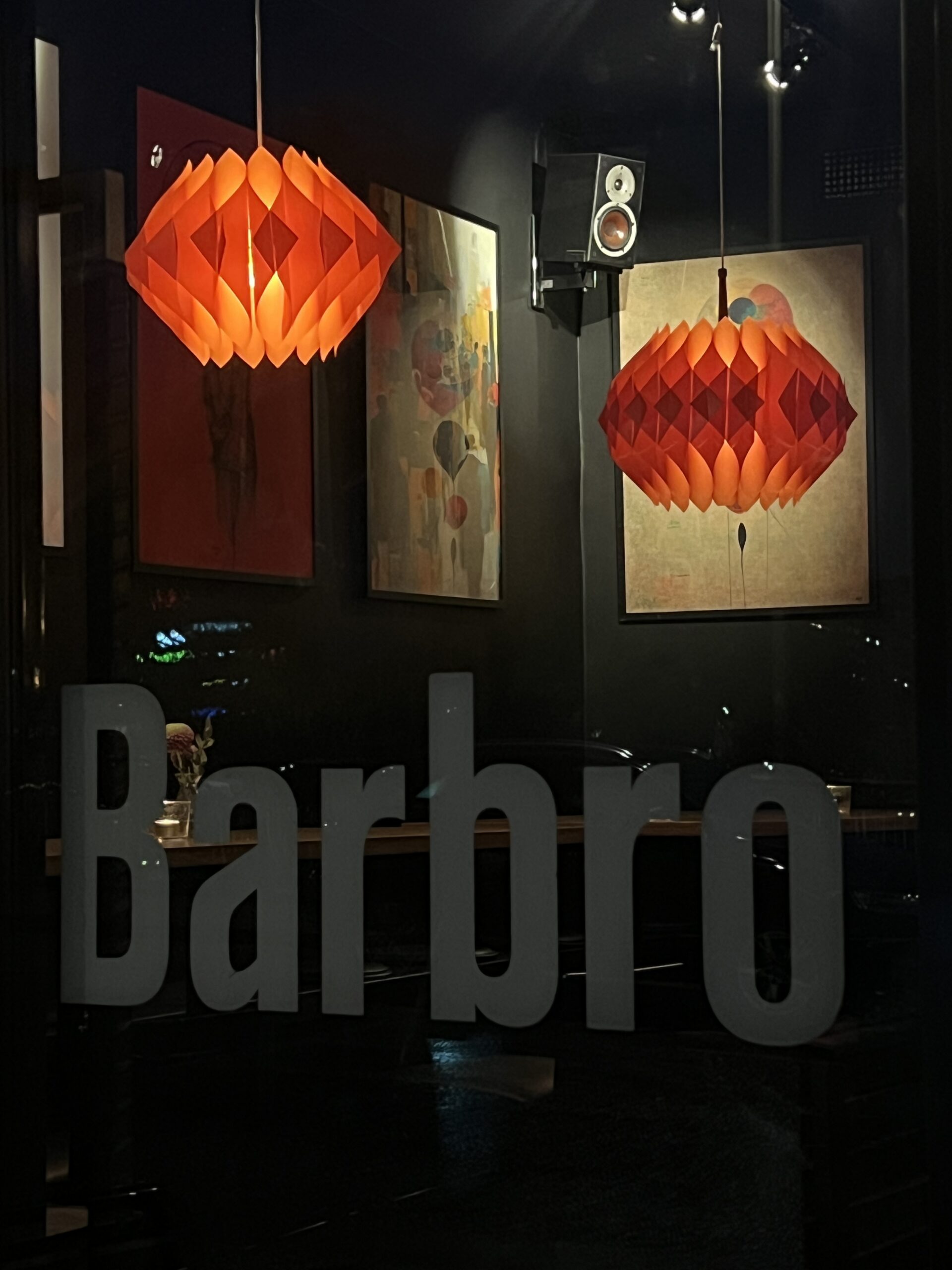
Varmt välkomna till årets GLÖGGMINGEL 2026, vi ses på Barbros tisdagen 1:a december kl. 18.00.
Vi öppnar dörrarna från kl. 18 för mingel, glögg, pepparkakor och skumtomtar.
Vi uppskattar fortfarande klubben som en trevlig mötesplats för oss medlemmar och ni får gärna äta middag först, vilket gagnar både klubben och FSF:s ekonomi.
FSF bjuder på glögg, skumtomtar och pepparkakor. Kom och mingla, ät och drick gott och förfira in julen med dina kollegor!
Varmt välkomna hälsar hela FSF:s styrelse.
Ansvarig för kvällen och vid frågor kontakta:
Ewa Cederstam
För vägbeskrivning:
www.bar-bro.se
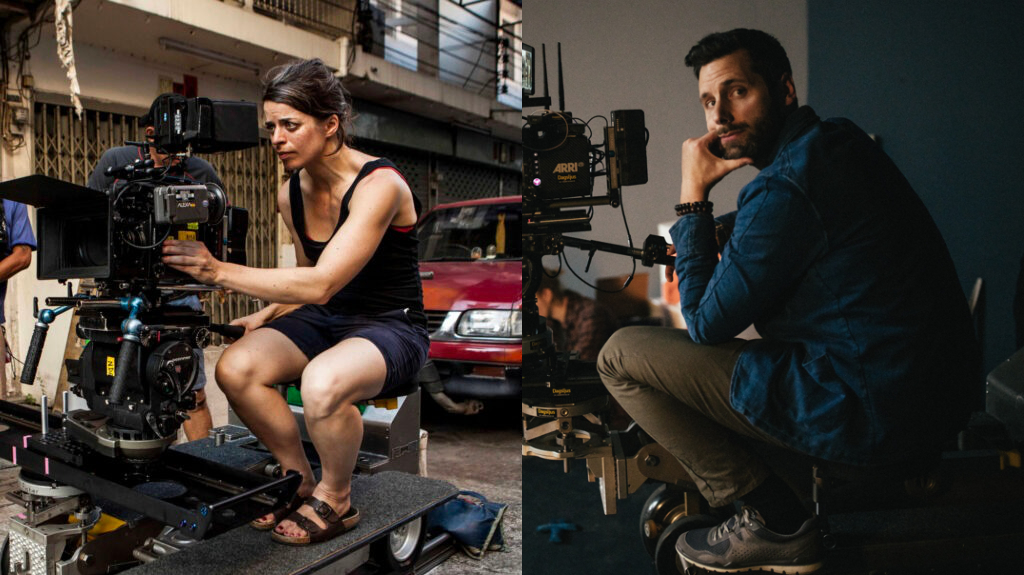
Ragna Jorming och Kenneth Ishii gästar FSF klubbträff Göteborg den 26/11 i ett samtal med oss medlemmar
Varmt välkomna till FSF klubbträff Göteborg torsdagen den 26 november.
Vi önskar bjuda in till en öppen dialog om filmfotografiets betydelse, vad vi inspireras av, vad vi drömde om och varför vi fortsätter sträva efter det perfekta filmprojektet. Kom och var med och skapa den här kvällen tillsammans med oss!
Vi hoppas på ett givande möte där alla medlemmar som vill deltar i dialogen. Vi lär känna varandra bättre och inspireras av varandra. Ragna Jorming och Kenneth Ishii kommer att inleda och ta upp några diskussionsämnen, och sedan går dialogen vidare runt bordet.
Läs mer…
Workshop – Artemis Director’s View Finder – 1:a december
WORKSHOP
@15.30 Camera Nordic, December 1
ARTEMIS DIRECTOR’S VIEW FINDER
Visual communication & better prep: Mastering Artemis’s tools with Nic Sadler
Get more out of the Artemis! In this in-depth workshop, you’ll learn how to use Artemis, Artemis Studio, and Artemis Prime to lock down your visual plan early, communicate clearly with your director and every department, and free up more room for creativity on set.
Läs mer…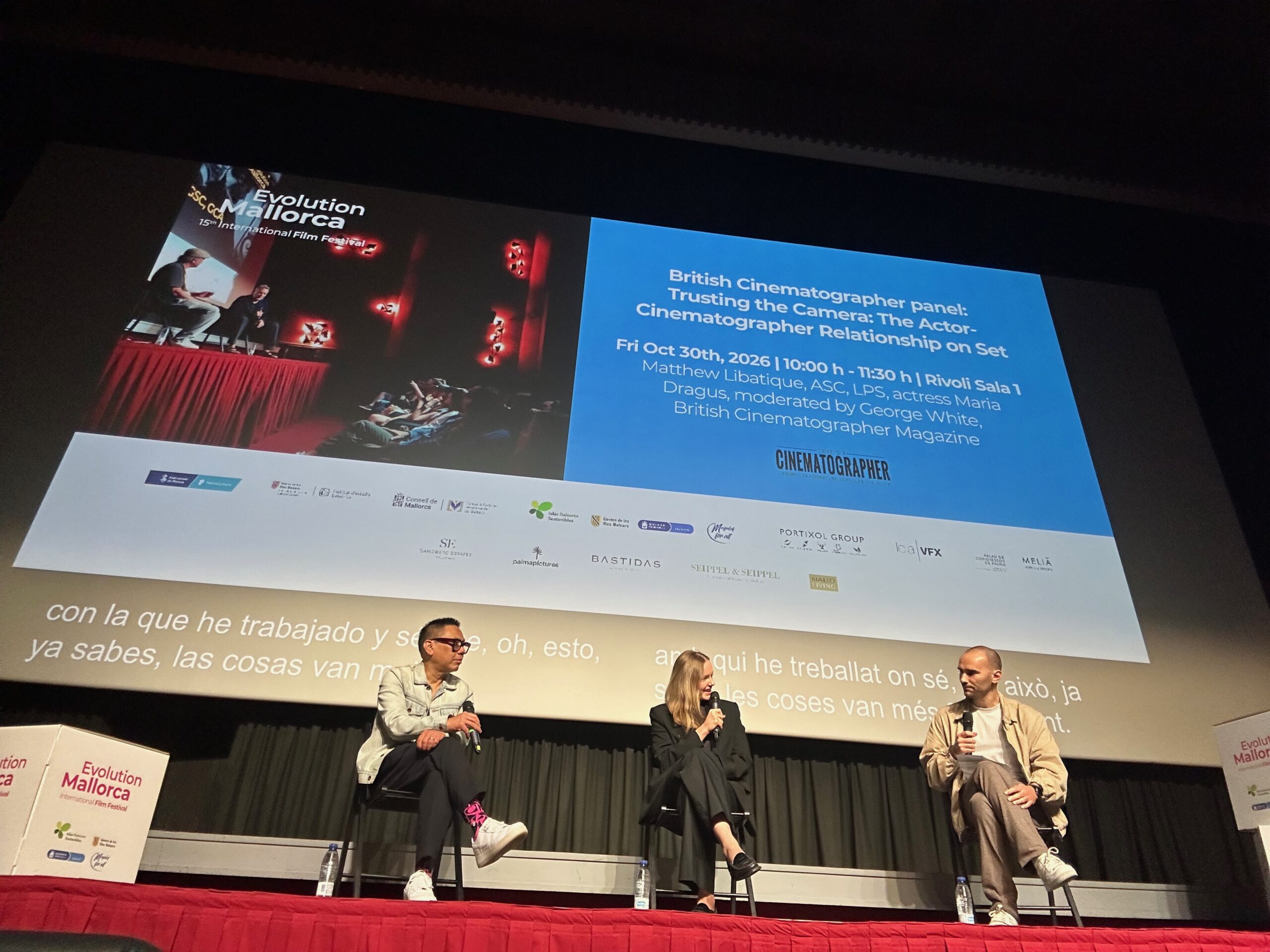
Between the Actor and the Camera
EMIFF 2026 panel “Trusting the Camera: The Actor-Cinematographer Relationship on Set”Matthew Libatique and Maria Drăguș.
Friday 30/10/2026 ⎢10:00 H ⎢RIVOLI ⎢Palma de Mallorca.
I am seated in the Rívoli Theatre, the chairs are very comfortable and the place is spacious. It is not packed and the atmosphere is pleasant. I am very curious about what will come out of this panel and where the conversation will lead us.
Läs mer…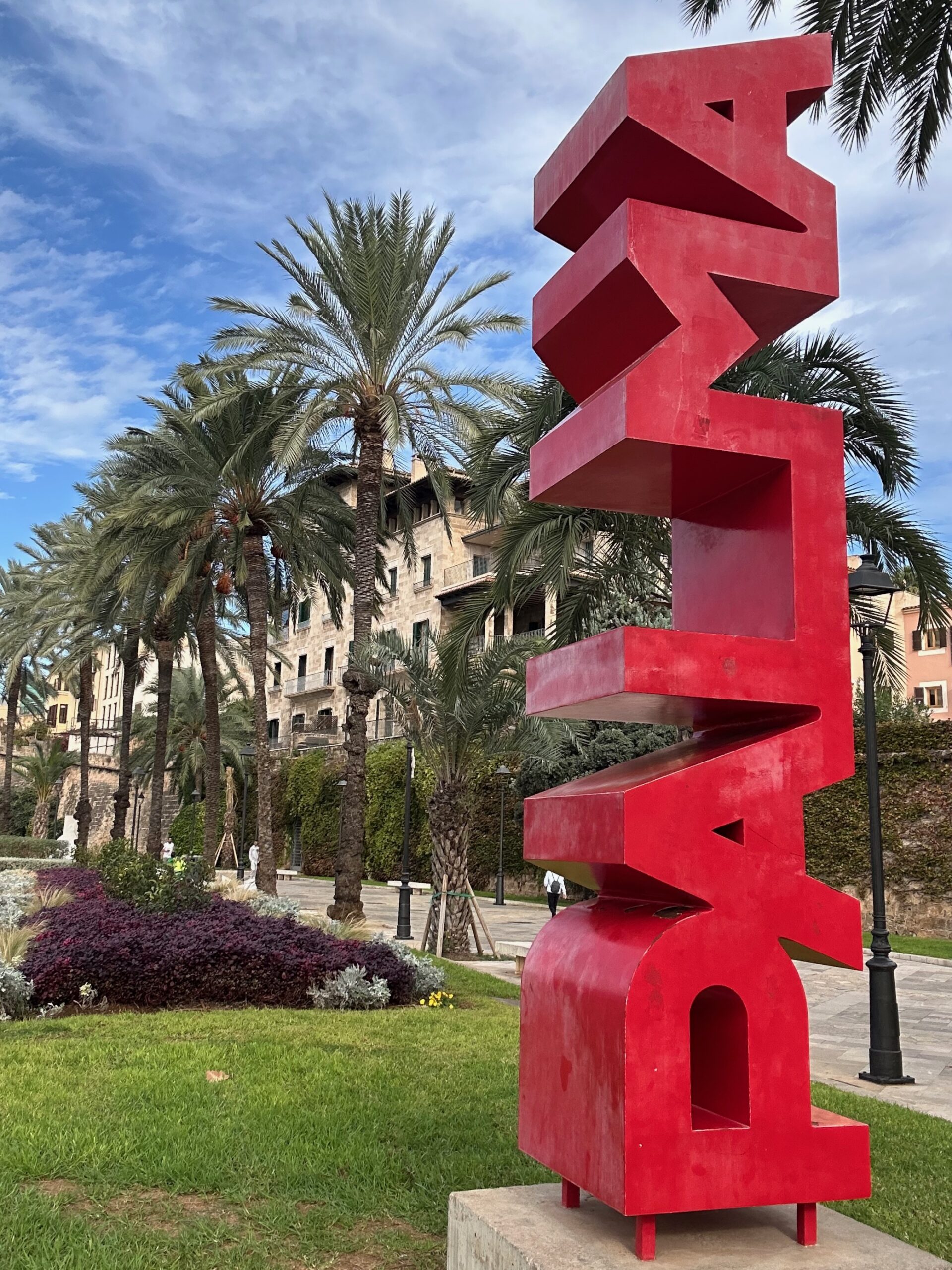
Pickled Herring
Some personal impressions from EMIFF 2026, by Lars Herrmann.
Here I am, packed into the airplane cabin, with 180 pale Swedes on a high-stakes höstlov migration, desperately fleeing the incoming dark for a few final hours of the Mallorcan sun.
Palma welcomes me with sunshine, warmth and the restless rhythm of traffic. Coming from Stockholm, the contrast is striking. The streets are lively, the terraces crowded, and there is a certain pleasure in walking through a city that seems reluctant to let go of summer. Stockholm, meanwhile, has already begun rehearsing winter.
Läs mer…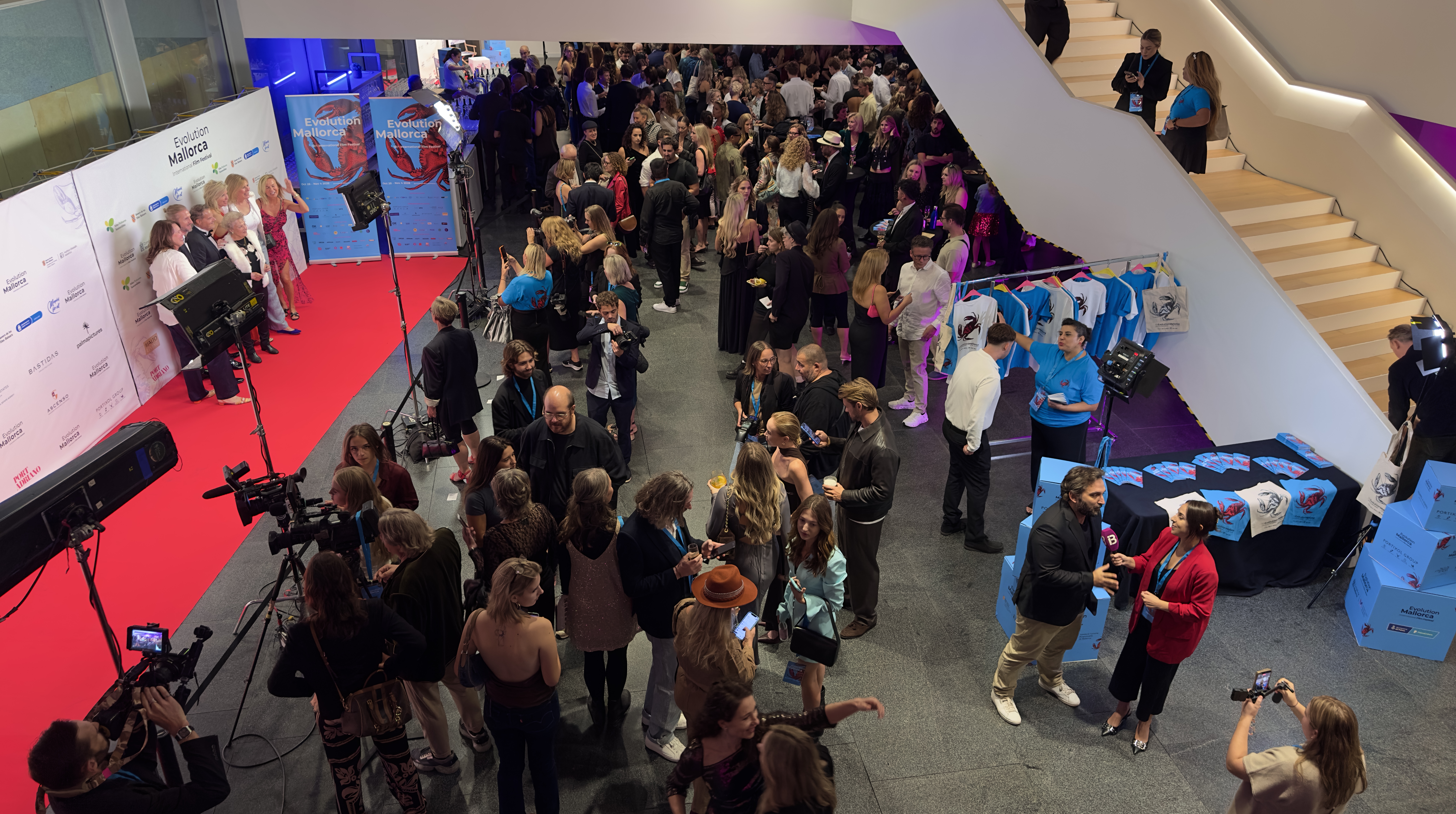
EMIFF 2026 – inspirerande dagar med fokus på filmfoto
Årets Evolution Mallorca International Film Festival blev en oerhört inspirerande upplevelse. Framförallt Cinematography Focus, med dagar fyllda av paneler, workshops, filmvisningar och många givande samtal med filmfotografer och andra kreatörer.
Cinematography Focus arrangerades för femte året i rad 28–30 oktober. Från FSF var även Lars Herrmann och Eric Börjesson på plats. Det fanns mycket att ta del av, men framförallt var det roligt att träffa kollegor, både lokala och besökande från andra delar av världen.
Skönt också att komma ifrån det svenska höstmörkret och regnet. Vädret på Mallorca var strålande, åtminstone de få minuter man var ute mellan biosalongerna!
Läs mer…